Bringing solutions to the climate conversation

Sara Oliver has come full circle.
A 2006 Duke grad with a B.S. in civil and environmental engineering, Oliver leads the Pratt School of Engineering’s newest degree—the Master of Engineering in Climate & Sustainability in Engineering (MEng).
She returned to her alma mater in 2023 as the degree’s founding program director and as an executive-in-residence—bringing her field-tested expertise to the classroom to help Duke shape a new kind of engineer: one who is technically brilliant, socially engaged and relentlessly solutions-focused.
“You can have the best solution, but if people don’t understand it or trust it, it won’t be adopted,” Oliver said.
Oliver built her career on the belief that engineering must go beyond design to address urgent global challenges. From managing flood risk with FEMA to returning to Duke as an educator, she has remained committed to using engineering as a tool for climate resilience and equity.
After Duke, Oliver earned a Master of Urban Planning from NYU. She went on to work nearly two decades in engineering and risk management, including eight years managing a FEMA contract at Michael Baker International. There, she helped communities prepare for disasters, blending technical expertise with community engagement and public policy.
This balance—between engineering and people—became a hallmark of Oliver’s approach.
“For a lot of engineers, the job is just to do the design. We can’t operate that way. We have to engage the people we’re designing for.” — Sara Oliver B.S.E.’06
Building a New Kind of Program
The new Pratt degree was driven in part by alumni vision.
John Sartor B.S.E.’92, P’29, a civil engineer and member of Pratt’s Board of Visitors, recalled, “A group of us on the board started asking questions about why there wasn’t a climate-related program. With everything going on globally, we felt like Pratt should lead in this space.”
Pratt’s Dean Jerome Lynch was brand new at the time and embraced the concept, Sartor said.
“It was incredible how quickly they stood up the program—and how quickly they found Sara,” he said.
Solutions, Not Just Studies
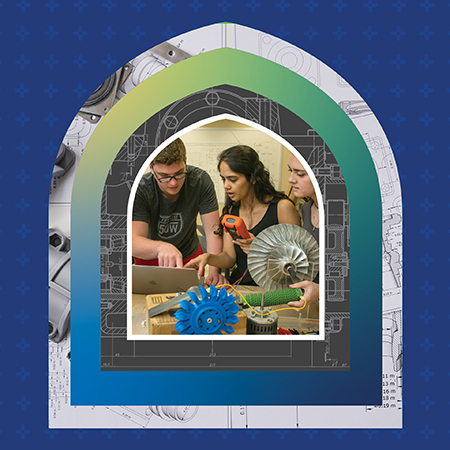
Oliver’s vision aligns with that need for solutions. The program she leads blends engineering with climate finance, energy transition, sustainable infrastructure and the circular economy. Courses emphasize applied learning and real-world experience through projects and internships.
Oliver teaches students to design for people, not just systems.
Whether the project involves decarbonized concrete or community flood mitigation, Oliver urges students to think behaviorally and empathetically.
The MEng program also interfaces with schools and units across the university, including Duke Law, the Nicholas School of the Environment, the Sanford School of Public Policy and more.
The program’s launch also signals Duke’s larger commitment to creating climate solutions. New faculty hires, cross-disciplinary initiatives and university-wide efforts like the Duke Climate Commitment show a coordinated push to address climate from every angle.
Oliver’s return to Duke isn’t just a personal milestone, it’s a signal that climate education is evolving—and that she is leading the way.
“She’s a perfect fit—technical, energetic, and focused on bringing engineering into the climate conversation,” Sartor said. “That’s what’s been missing. There has been a lot of theory and study, but not enough solutions.”
-
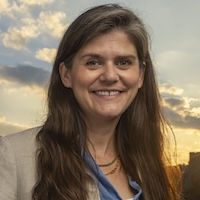 Sara OliverDirector, Climate and Sustainability Engineering Master's ProgramCLASS OF 2006
 -
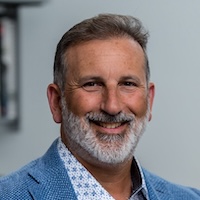 John SartorMember, Pratt School of Engineering Board of VisitorsCLASS OF 1992